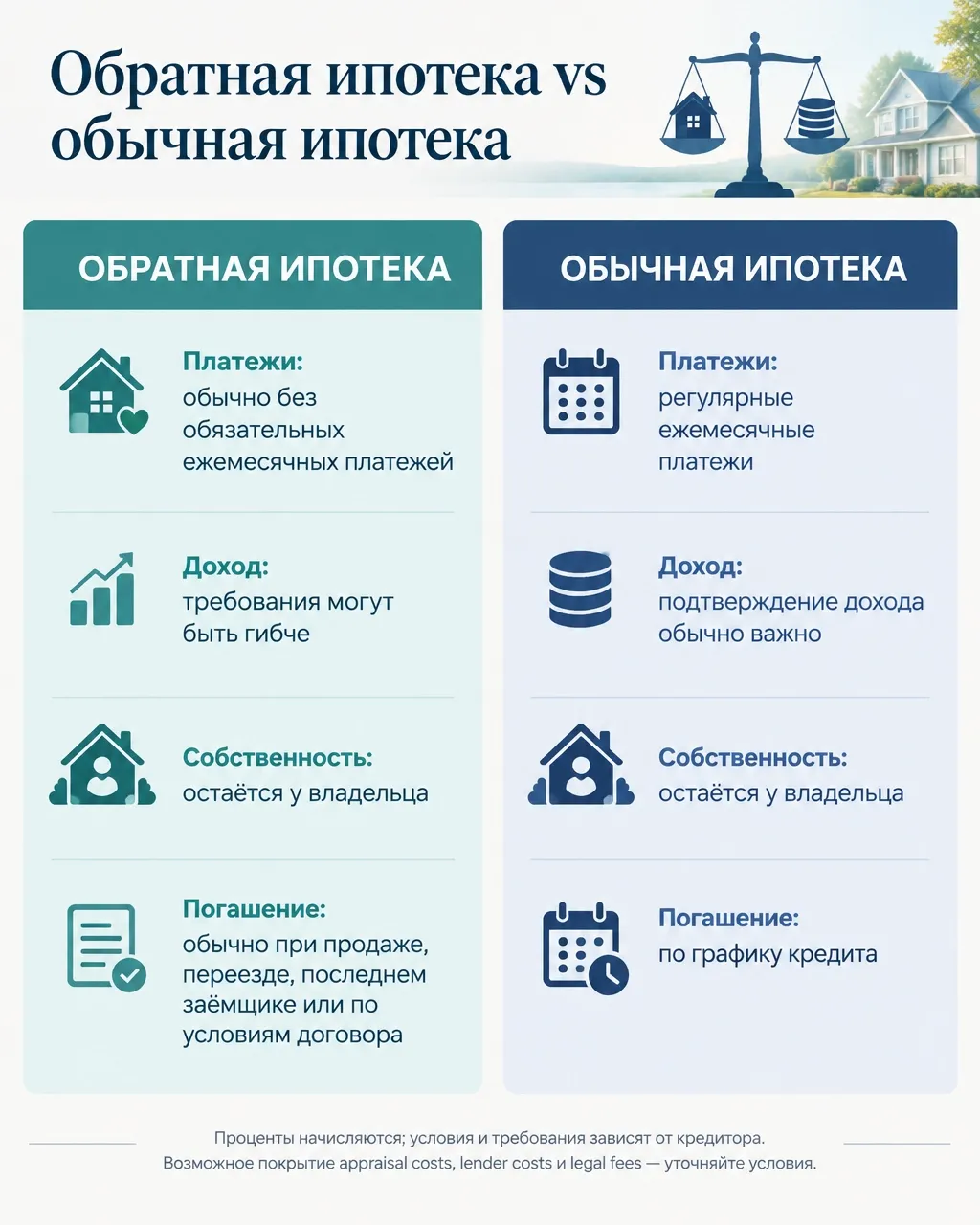
A reverse mortgage and a regular mortgage are different financial products. Here is the main difference, without the jargon.
• Payments: with a regular mortgage the borrower usually makes regular monthly payments. With a reverse mortgage, mandatory monthly payments may not be required — but interest keeps accruing, so the debt usually grows.
• Income: for a regular mortgage, proof of income and the ability to service payments are usually very important. With a reverse mortgage, income requirements may be more flexible, but the lender still verifies that you meet the program conditions.
• Ownership: in both cases the home stays with the owner, who normally remains responsible for property taxes, insurance and upkeep.
• Repayment: a regular mortgage is repaid on a schedule. A reverse mortgage is usually repaid when the home is sold, when you move out, on the death of the last borrower, or when other contract conditions occur.
Important: the available amount, interest, fees, requirements and timelines depend on the lender. Ask whether appraisal costs, lender costs and legal fees are covered. Before deciding, it is useful to get independent advice and to read the contract carefully.